July 23, 2026


Gurugram Tops NCR Housing Market As Infrastructure Struggles To Keep Pace
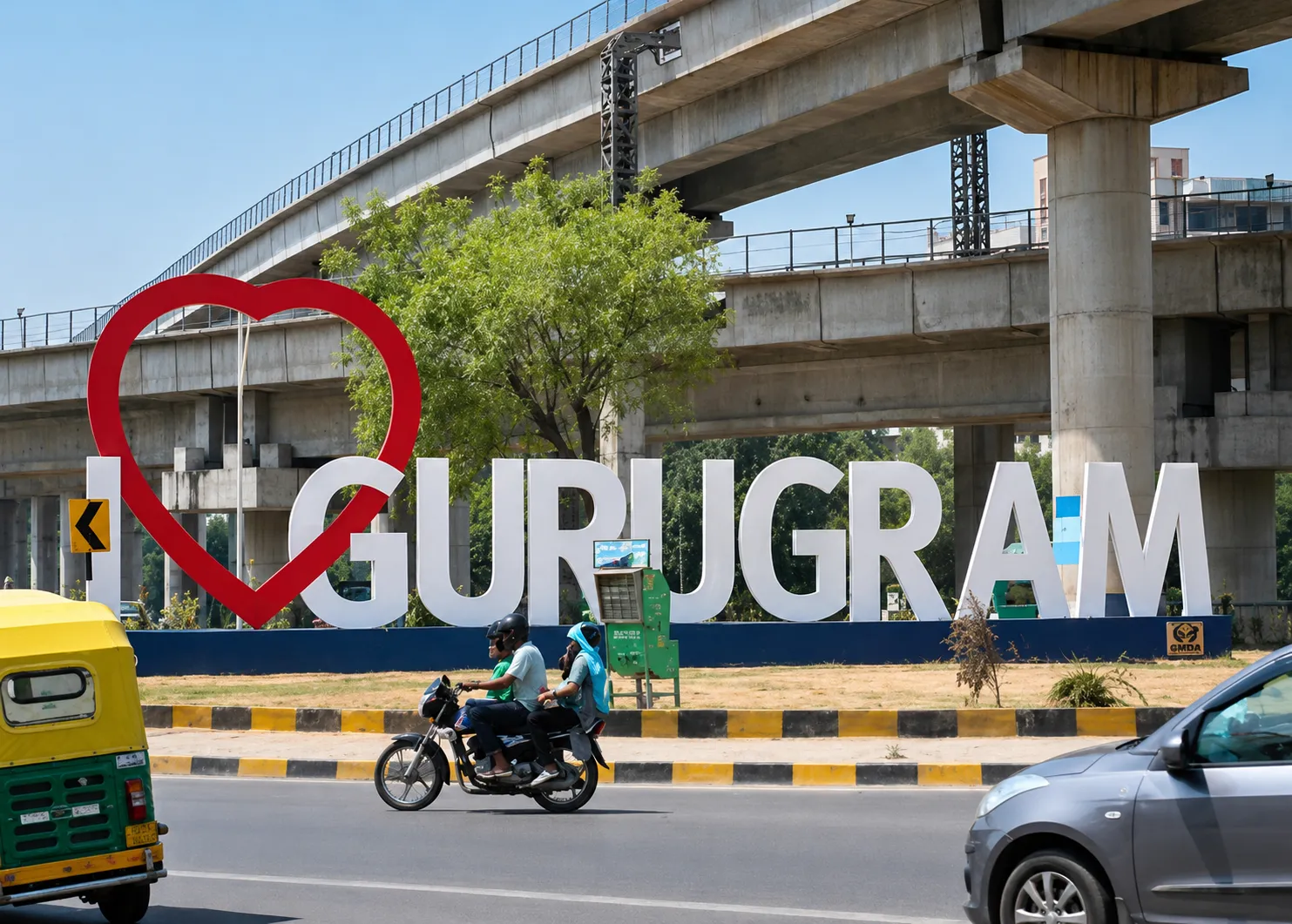
Gurugram has emerged as NCR’s biggest residential market, accounting for 53 per cent of housing launches and 48 per cent of home sales in 2025. The city continues to attract large investments in housing and commercial real estate, strengthening its position as one of the country’s fastest-growing urban centres
The pace of growth, however, is putting increasing pressure on civic infrastructure. Water security, last-mile connectivity, drainage and coordination among multiple government agencies have emerged as key concerns, prompting calls for greater focus on infrastructure execution alongside real estate development.
Execution Gap Widens
Despite Gurugram’s strong real estate momentum, infrastructure development has struggled to keep pace. The Haryana government approved a Rs 3,034 crore budget for the Gurugram Metropolitan Development Authority (GMDA) for FY26, including around Rs 900 crore for infrastructure projects. Even as the city expands its metro network and augments water supply, several emerging sectors continue to face gaps in drainage, sewerage and last-mile connectivity.
“Recurring road excavations, inadequate sewage and drainage infrastructure, poor last-mile connectivity and weak coordination among multiple government agencies continue to affect residents”, Siddharth Jain, President, NAREDCO NextGen NCR and Director, Tulip Infratech, said at the NAREDCO Real Estate Conclave 2026. Drawing from his experience of developing projects along the Southern Peripheral Road, he said the lack of coordination among multiple government agencies remains one of the biggest challenges.
Jain said that while Gurugram’s master plan is largely in place, effective execution requires all concerned authorities to work in a synchronised manner to avoid duplication, delays and infrastructure disruptions. He said developers are aware of the city’s infrastructure challenges and are committed to working with authorities to identify practical solutions.
Planning Must Catch Up
The Haryana government is expanding Gurugram’s transport infrastructure through the 28.5-km metro corridor with 27 stations to improve connectivity across key residential and commercial hubs. However, urban planners believe large infrastructure projects alone will not address the city’s broader planning challenges.
Prof. Rasmi B. Tandon, Deputy Director, Council of Architecture, Ministry of Education, said, “Gurugram’s remarkable growth has largely been driven by real estate development. Despite its impressive urban transformation, the city continues to face significant challenges related to water availability, mobility and uneven infrastructure development.”
Calling for a change in the planning approach, Tandon said, “A major shift towards participatory and people-centric planning is required. Policymakers, professionals and citizens must work together to address urban challenges, particularly last-mile connectivity and the disconnect between old and new Gurugram.”
Sustainability Takes Centre Stage
Water security is emerging as one of Gurugram’s biggest long-term challenges. The Central Ground Water Board continues to classify the district as “Over-exploited”, underscoring the growing pressure on natural resources as urbanisation and real estate development accelerate.
Against this backdrop, Durga Shankar Mishra, former Secretary, Ministry of Housing and Urban Affairs, said, “The debate should not be whether Gurugram can become a world-class city, but how it can become a sustainable and smart city for future generations.” He said Gurugram already possesses many characteristics of a global city, but must improve walkability, cycling infrastructure and environmental sustainability.
Further emphasising the need for sustainable resource management, Mishra said water security should become a top priority, calling for stronger water conservation measures, reuse of treated water and sustainable resource management to secure the city’s future.
Source – BusinessWorld
Latest Blogs